Herramienta de localización automática 2D de puntos cefalométricos
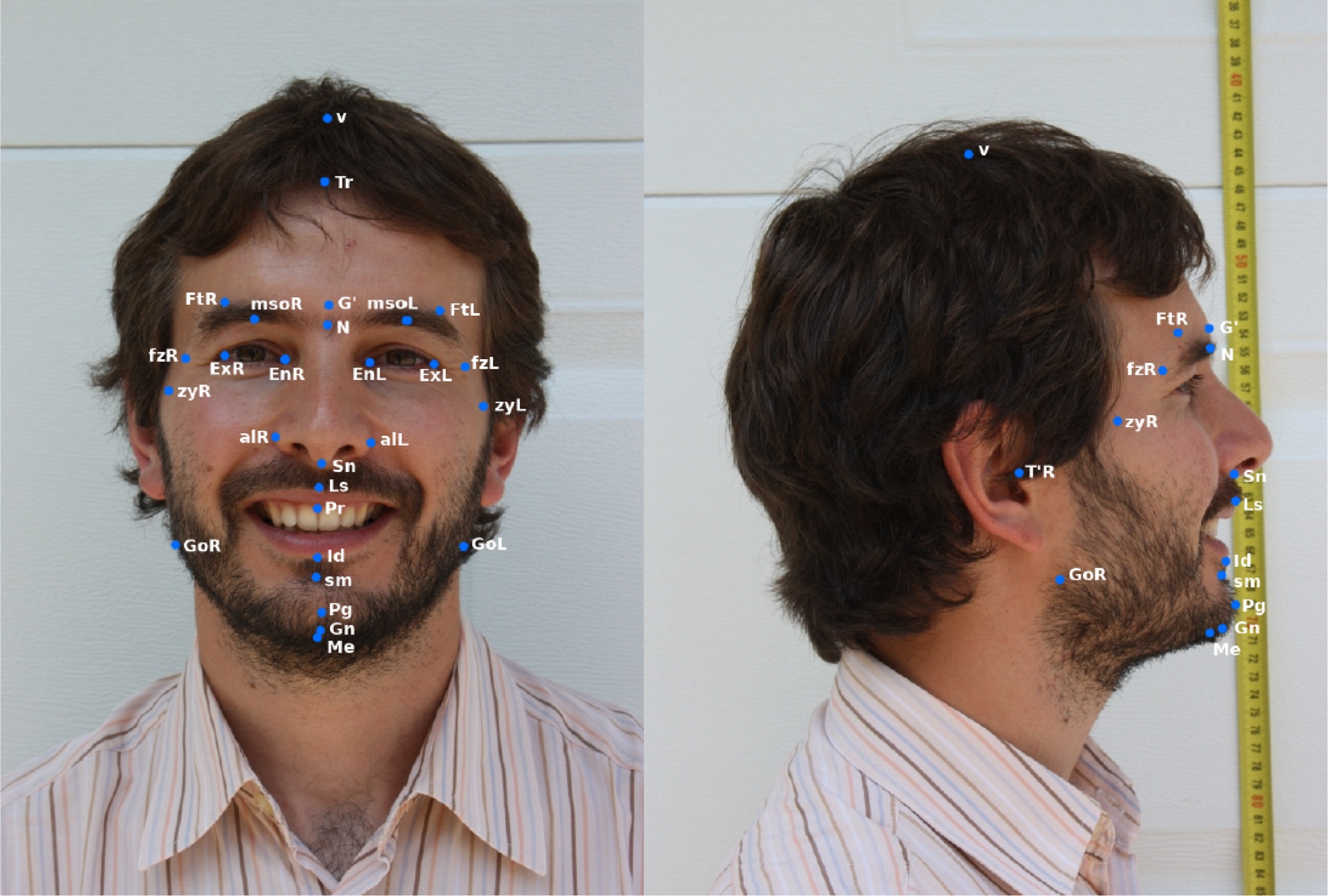
Al enviar una imagen en la demo online, el algoritmo aplicará automáticamente nuestro método de localización de puntos y se mostrará un visor interactivo. Las imágenes subidas se borrarán una vez utilizadas para detectar los puntos de referencia, no almacenando ninguna información sobre ellas en nuestros servidores.
Rellena los campos del siguiente formulario para obtener la localización automática de puntos de referencia cefalométricos.
Here is the result of your image,
Oops! We didn't find any faces in the image. Make sure at least one human face is clearly visible.
Los puntos de referencia marcados en verde corresponden a puntos de referencia visibles, mientras que los marcados en rojo corresponden a puntos de referencia que no son visibles pero que el algoritmo de marcado automático aún es capaz de estimar. Al situar el cursor sobre cada punto de referencia, aparece su nombre. Además, cuando el cursor pasa por encima de la imagen, aparece un conjunto de herramientas en la esquina superior derecha. De izquierda a derecha, estas herramientas le permiten descargar la imagen, desplazarse por ella, hacer una selección rectangular, utilizar una selección de lazo, acercar y alejar, autoescalar el área donde se colocan los puntos de referencia y restablecer la vista original.
En este artículo encontrará todo lo que necesita saber sobre la localización automática de puntos cefalométricos en 2D:
PUBLICACIONES
Localización automática 2D de puntos cefalométricos para análisis forense
Superposición Craneofacial
Publicado el 15 de mayo, 2025
Los puntos cefalométricos son referencias anatómicas críticas situadas en el rostro humano y se utilizan ampliamente en la antropología forense para tareas esenciales como la identificación humana, la comparación facial, las mediciones antropométricas y la superposición cráneo-rostro (George, 2007; Stephan et al., 2019; Huete et al., 2015). […]
Escrito por
Guillermo Gómez
Investigador de Panacea Cooperative Research